CiteSpace © 2003-2021 Chaomei
Chen
Visualizing Patterns and Trends in
Scientific Literature
|
|
|||||
|
Blog (中文) |
|||||
|
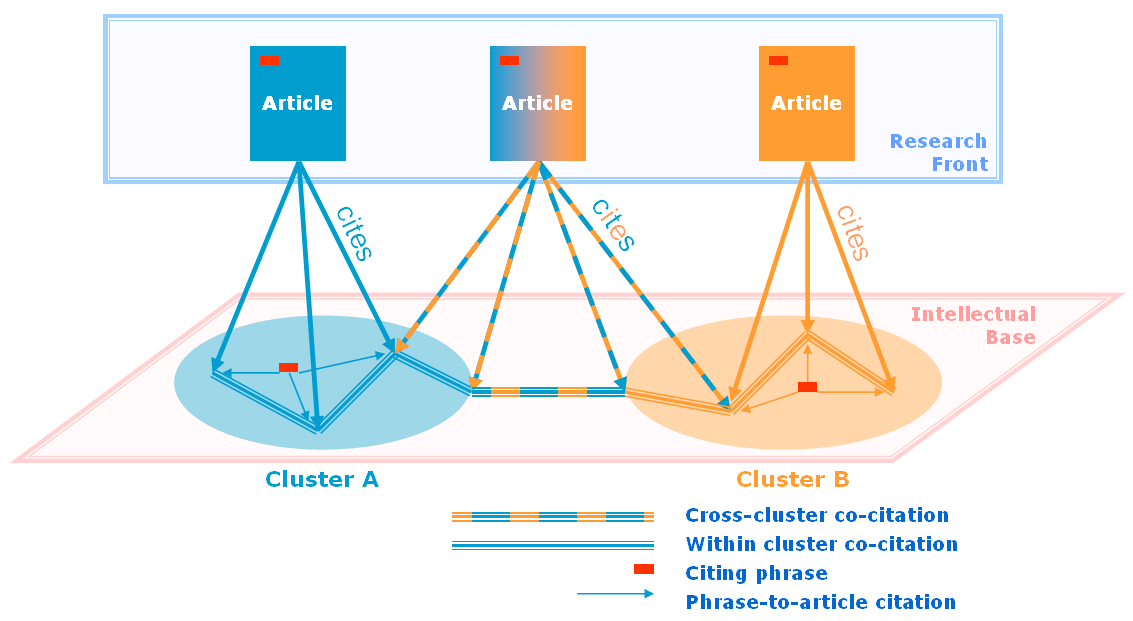
Chen, C. et al. (2010) The structure and dynamics of co-citation clusters: A multiple-perspective co-citation analysis. Journal of the American Society for Information Science and Technology. (10.1002/asi.21309) |
|
Chen, C. (2006) CiteSpace II: Detecting and visualizing emerging trends and transient patterns in scientific literature. Journal of the American Society for Information Science and Technology, 57(3), 359-377. 《中译本》
|
|
Chen, C. (2004) Searching for intellectual turning points: Progressive Knowledge Domain Visualization. Proceedings of the National Academy of Sciences of the United States of America (PNAS), 101 (Suppl. 1), 5303-5310.
|
|
March 13, 2004: Science News Online. Mapping Scientific Frontiers by Ivars Peterson. (Local Copy) |
|
January 21, 2004: BioMedNet. Special Report: Mapping intellectual milestones by Helen Dell. (Local Copy)
|
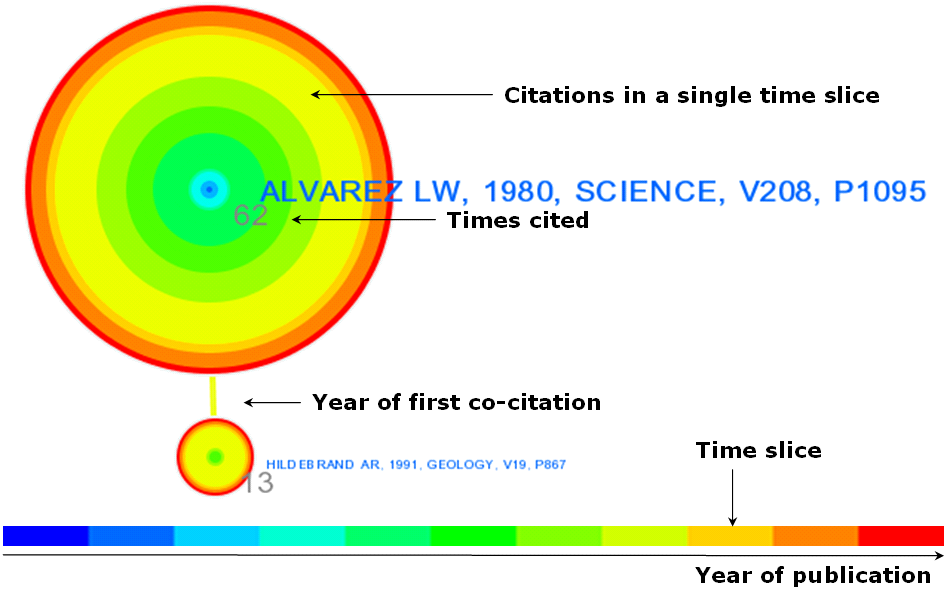

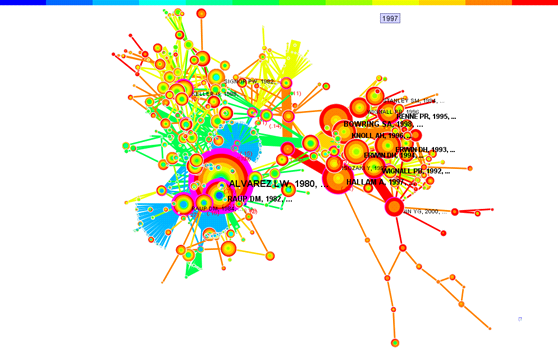
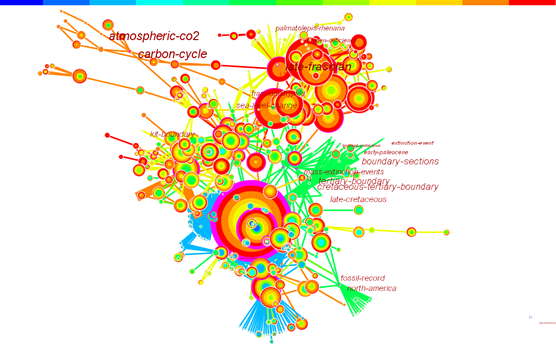


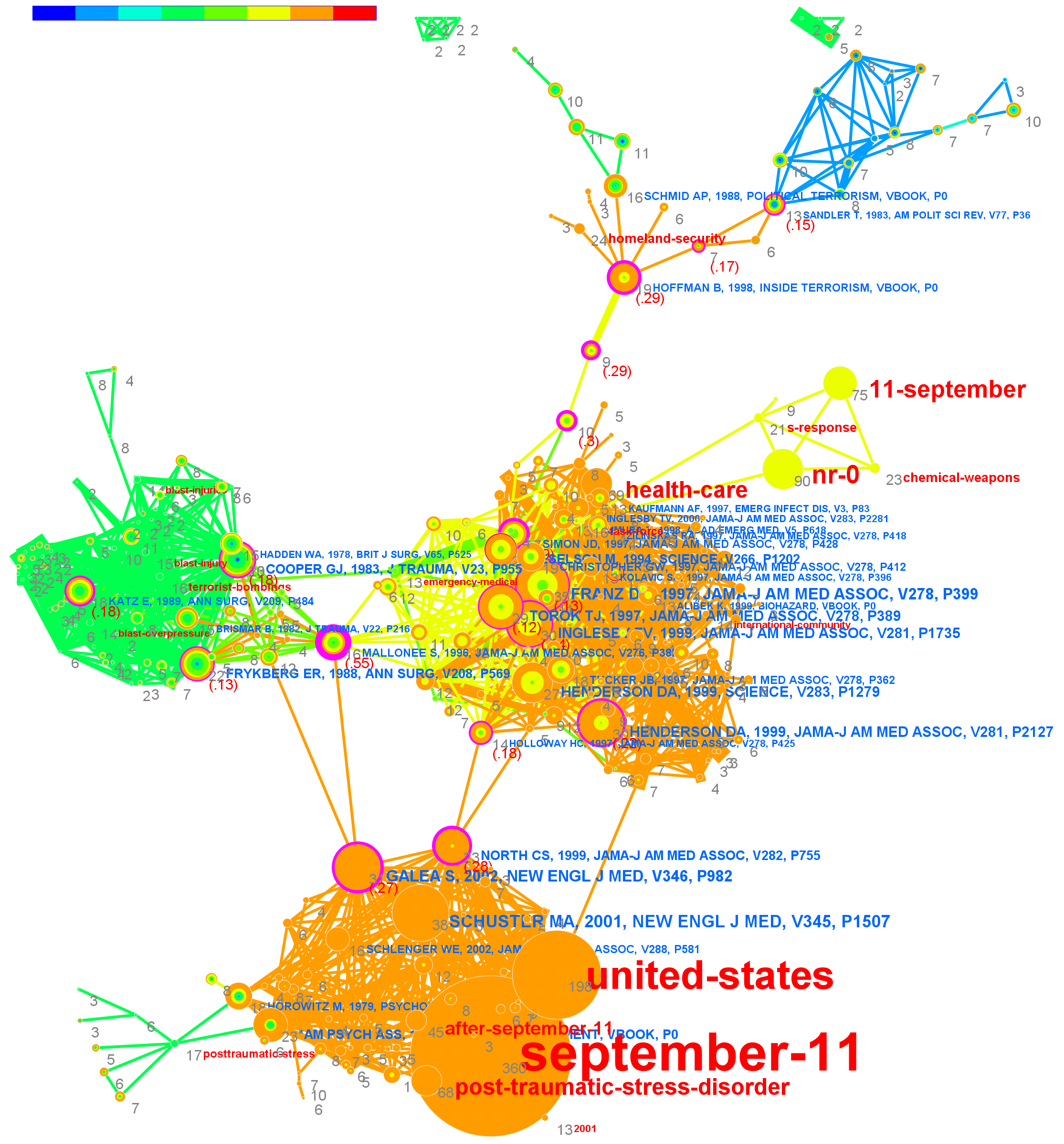
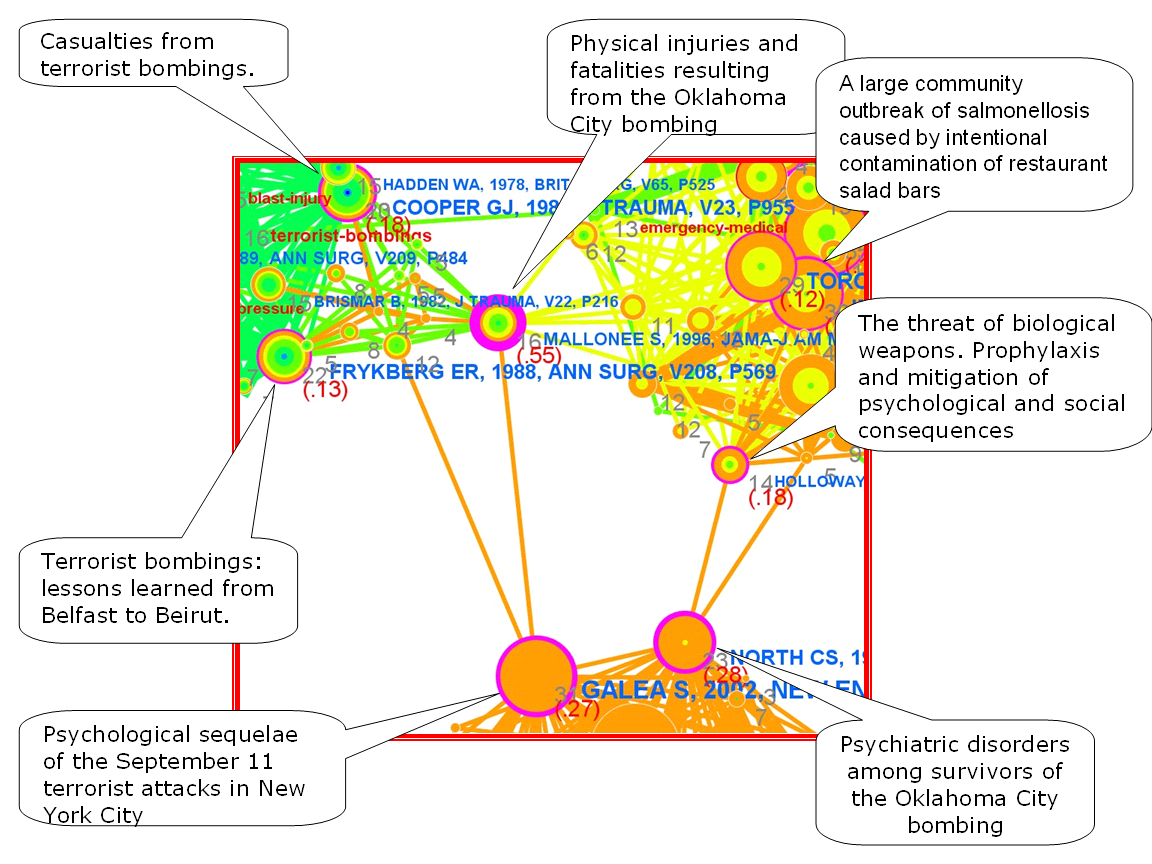




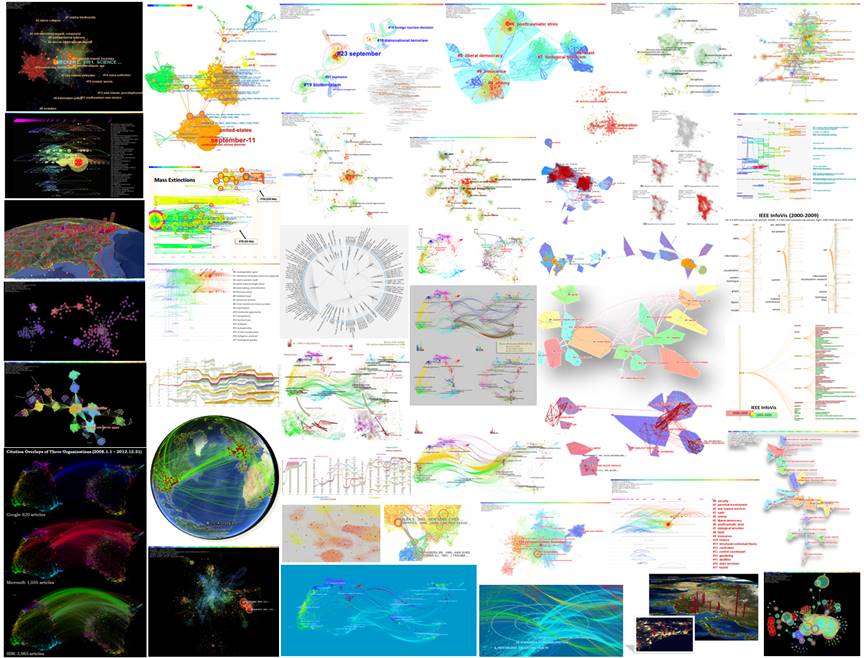
CiteSpace is a freely available Java application for visualizing and analyzing trends and patterns in scientific literature. It is designed as a tool for progressive knowledge domain visualization (Chen, 2004). It focuses on finding critical points in the development of a field or a domain, especially intellectual turning points and pivotal points. Detailed case studies are given in (Chen, 2006) and other publications. CiteSpace provides various functions to facilitate the understanding and interpretation of network patterns and historical patterns, including identifying the fast-growth topical areas, finding citation hotspots in the land of publications, decomposing a network into clusters, automatic labeling clusters with terms from citing articles, geospatial patterns of collaboration, and unique areas of international collaboration.
CiteSpace supports structural and temporal analyses of a variety of networks derived from scientific publications, including collaboration networks, author co-citation networks, and document co-citation networks. It also supports networks of hybrid node types such as terms, institutions, and countries, and hybrid link types such as co-citation, co-occurrence, and directed citing links.
The primary source of input data for CiteSpace is the Web of Science. Search for a topic of interest and download the search results (including full records and references). CiteSpace will handle the data from there. CiteSpace also provides some simple interfaces for obtaining data from PubMed, arXiv, ADS, and NSF Award Abstracts. CiteSpace can be used to generate geographic map overlays viewable in Google Earth based on the locations of authors.
Notes:
You need to have Java Runtime installed on your computer.
Can I access an expired version?
Yes. After July 31, 2011, version 2.2.R11 will expire. If you still need to use it beyond the expiration date, temporarily reset the clock on your computer to a prior date, for example, July 1, 2011, and then launch it via the Manual link. Don’t forget to reset your computer clock properly afterwards. The same trick will work for other older versions of CiteSpace.
How should I get the new version?
New versions of CiteSpace will be available as a downloadable dist.zip file. Go to the Download page for further instructions.
Follow the CiteSpace Manual and Tutorial links for information on how to get started.
Disclaimer
CiteSpace is made available as it is. Use it at your own risk.
Created: Sept 13, 2004
Updated: January 17, 2021
(c) 2003-2021 Chaomei Chen. All rights reserved.
See also: www.pages.drexel.edu/~cc345